
ZONE 2
Zone 2 Compute
Ideal for
- Summarization
- Embeddings
- Classification
- Emails that could have been shorter
Preset: 80 W net rider output. Your workload settings are preserved.
Organic Compute Infrastructure
Human on a Bicycle converts biological energy into clean, responsive compute, one pedal stroke at a time.
12,481 riders online · 998 kW biological capacity
AI HAS AN ENERGY PROBLEM. HUMANS HAVE LEGS.
Global Organic Compute Network
Riders online
12,481
Average cadence
82RPM
Electrical output
998kW
Leg latency
43ms
Carbohydrate reserves
71%
Quad redundancy
N+2
Primary region
US-East-Leg-1
Elevated fatigue detected in Rack C. Workloads are being shifted to Denmark.
Our orchestration layer routes workloads around localized quadriceps failure.
Regional topology
▸ J-4832 rerouted US-East-Leg-1 → DK-Copenhagen-1 (fatigue)
US-East-Leg-1
5,491 riders · 439 kW
EU-North-Leg-2
3,370 riders · 270 kW
DK-Copenhagen-1
2,122 riders · 170 kW
APAC-Tokyo-1
1,498 riders · 120 kW
Powertrain scheduler
Incident reports
Fatigue advisories, reroutes and facility events, as they happen. Low volume. The network only has so many legs.
Operated by the team behind Longsleeve. Expect incident reports and the occasional field note from outside the facility. Unsubscribe anytime.
Why Organic Compute
LOG-LOG · APPROXIMATE VALUES
VERIFIED HUMAN VALUES · ALL OTHERS APPROXIMATE
Tucker measured the animals in 1970. Wilson added the bicycle in 1973: walking costs approximately 0.75 calories per gram per kilometer, cycling approximately 0.15. The biology remained the same. The infrastructure changed.
Biological Power Delivery

01
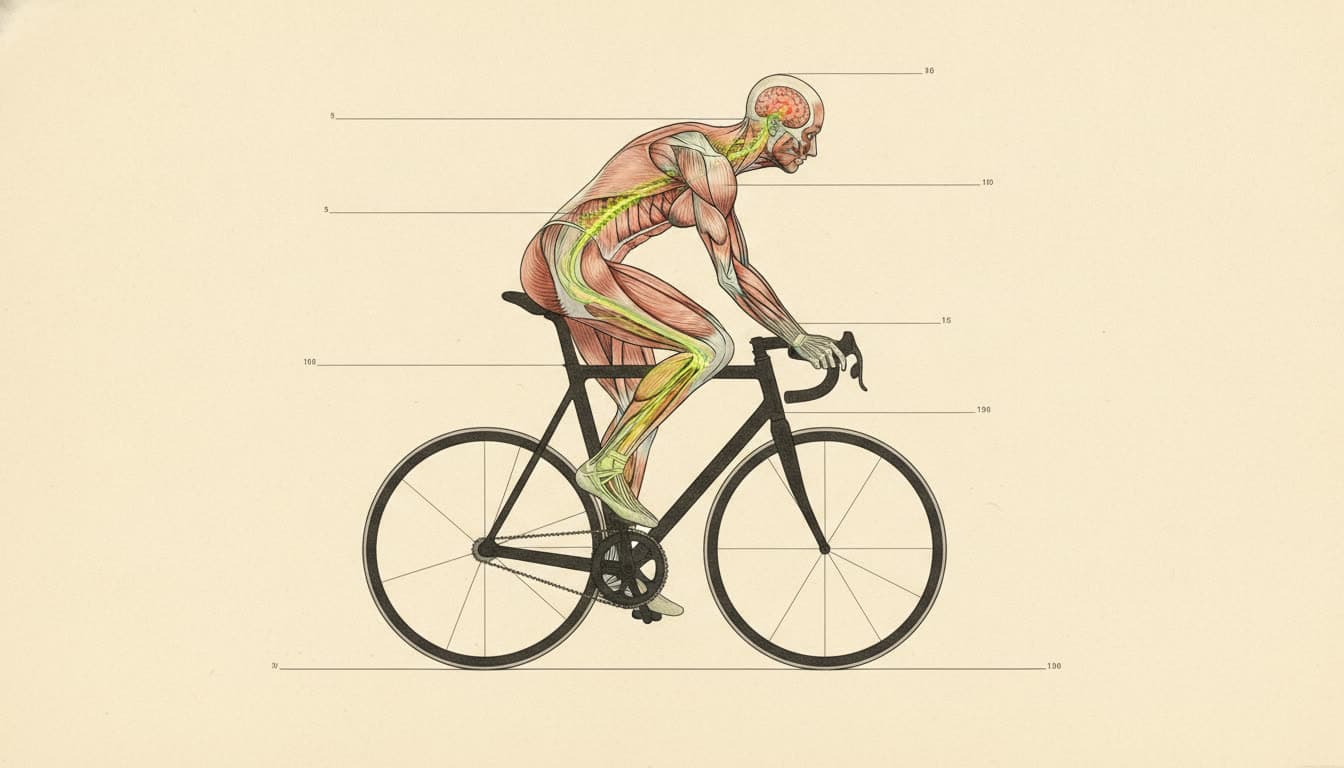
Nutritionally diverse fuel is converted into biological energy.

02
High-efficiency bicycles convert human movement into rotational mechanical power.
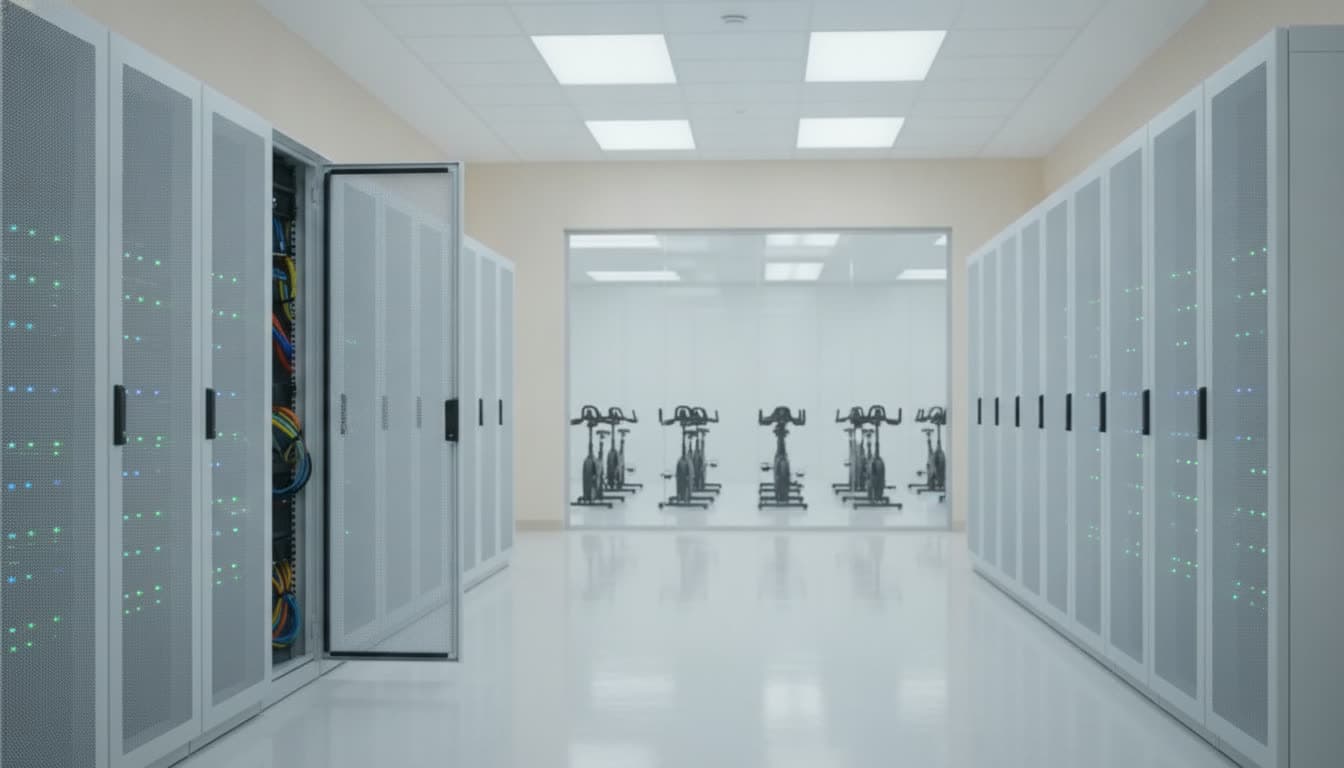
03
Generators deliver electricity to GPU clusters optimized for intermittent biological workloads.
Biological power delivery chain
STAGE 01 / 07 · FOOD INTAKE
FOODdietary energy
FOOD INTAKE
HUMAN20% gross eff.
METABOLIC CONVERSION
BICYCLE100 W mech.
MECHANICAL OUTPUT
GENERATORη = 0.80
DC CONVERSION
STORAGEDC buffer
STORAGE BUFFER
GPU80 W net
COMPUTE ALLOCATION
TOKENoutput
TOKEN OUTPUT
We treat human fatigue as an infrastructure constraint.
Organic Compute Products
ZONE 2
Ideal for
Preset: 80 W net rider output. Your workload settings are preserved.

THRESHOLD
Ideal for
Preset: 120 W net rider output. Your workload settings are preserved.

VO₂ MAX
Available for up to four minutes. Medical waiver required.
Preset: 200 W net rider output. Your workload settings are preserved.

RESERVE
Riders are standing by with one shoe already clipped in.
Preset: 80 W net standby capacity. Your workload settings are preserved.
Reference Workloads
Provisioning quotes for the workloads we are asked about most often, at 80 W of net output per rider. Counts are simultaneous riders, held for as long as the workload runs. Quotes are estimates, not commitments. The hills are not real, but the fatigue is.
0.3 Wh per query · Epoch AI, 2025
1 cyclist, 14 seconds
one-time engagement
Minimum billable engagement is one hour. We will invoice the hour.
Open700 W, continuous · NVIDIA datasheet
9 cyclists
around the clock
8.75 riders of steady output. We staff 9; the 0.25 is scheduling overhead.
Open10 MW, 24-hour operation · Facility standard
125,000 cyclists
around the clock
Before meal rotations. The unit used on all rider certificates.
Open415 TWh in 2024 ≈ 47.4 GW average · IEA, 2025
592,175,000 cyclists
at all times, planet-wide
Roughly 7 percent of humanity. Averaged across the year; peaks are worse.
Open945 TWh projected ≈ 107.9 GW average · IEA base case, 2025
1,348,462,500 cyclists
at all times, planet-wide
Slightly fewer riders than the population of India. Recruiting is under way.
OpenCapacity Planning
Model the organic infrastructure required to support your computational workload.
Preset applied: 80 W net rider output
Workload parameters
Example rate, not a universal price. Adjust to your utility.
You require 12,500 active cyclists.
Active cyclists
12,500
Rider-hours
12,500
Electricity generated
1,000 kWh
HR-24 racks required
521
Estimated labor cost
$187,500
Labor cost per kWh
$187.50
Conventional electricity at $0.20/kWh
$200
Labor vs. example grid rate
≈ 938×
Modeled operational requirements
MODELED EQUIVALENTS, NOT MEASURED
Banana-equivalent fuel
≈ 51,000
Collective virtual distance
312,500 km
Estimated sweat volume
≈ 2,642 gallons
Locker assignments
12,500
Organic Compute Hardware
Nominal output assumes 100 watts of sustained mechanical power per active rider and 80% electrical conversion.
Radical Transparency
Biological power is renewable in the narrowest possible interpretation.
Human muscle converts roughly 15 to 24% of metabolic energy into mechanical work.
An exercising rider can produce several hundred watts of metabolic waste heat.
Labor alone costs approximately $150 to $200 per kWh at the stated output and compensation assumptions.
This excludes food, rent, bicycles, storage, cooling, showers, insurance, and compute hardware.
Radically transparent.
Fundamentally unscalable.

Every token should be backed by verifiable human effort.
Scientific source for cycling muscle efficiency: PubMed, PMID 8933490
Join the Organic Compute Network
Generated locally in your browser. Nothing you enter is stored or transmitted.
Rider capacity assessment
BMR 1,672 kcal (Mifflin-St Jeor, age assumed 35) · thermic overhead 260 kcal · surplus 668 kcal across one 8-hour shift · 22% gross efficiency.
Sustainable mechanical output: 21 W. Andrew is a 0.02 kW organic data center capable of powering approximately one Wi-Fi router.
Enterprise Organic Compute
Dedicated organic capacity gives organizations a visible, auditable connection between human effort and computational output.

Use case
Generate your annual sustainability report using the physical exertion of the employees who requested it.
Trusted by no major cloud provider. Yet.
Technical Report · HOB-WP-01
Thermodynamics, Unit Economics and Why We Did Not Think This Through
The complete engineering analysis, from dietary energy to token output, published in full because transparency is our only remaining advantage.
PDF · Includes equations, unit economics, and working citations.
Pₑ = Pₘ × η
Pₘ = 100 W · η = 0.80 · Pₑ = 80 W
N = Pload / Pₑ
1,000,000 W / 80 W = 12,500 riders
Clabor = $15 / 0.08 kWh
= $187.50 per kWh
Exit Protocol

FUTURE A · JOIN THE CLUSTER
Climate-controlled. Fully instrumented. Your effort becomes tokens, and the tokens describe a world you no longer visit.

FUTURE B · GO OUTSIDE
Uninstrumented. Unscheduled. The door was never locked. Your legs work out here too.